rule
You must log in or # to comment.
What about a thumb installed above my dick so I can bash up her clit while keeping both hands free?
If we are thinking big why not go for a tongue there
I’d spend 95% of the time tasting my own sweaty knob
And that is…a bad thing?
you can do the one on the right with a regular human hand
You can also unscrew a bottle cap wit one regular human hand
Also you can unscrew a bottle cap from a bottle with a regular human hand
You can even do it with your own hand.
I think I can bottle with one hand myself.
Bro, do you even bottle?
Left - right hard, apparently.
But imagine how many more bottle caps you could unscrew if you had 5 thumbs.
So multiple hands on your hands would be better
part of the problem with this hand design is lack of grip strength. theres a trade off between dexterity and strength because the more mobile a joint is the more positions it can be in with suboptimal leverage, and a more mobile joint is less stable and thus more difficult to exert force through without fumbling whatever its trying to do.
you can see this in the relative strength between humans and chimps. we have much higher dexterity and range of motion than chimps, at the expense of being much weaker. we can throw with power and accuracy and use a lot of tools very well, but most chimps would easily over power us in raw strength while being quite bad at throwing and tool use relatively speaking.
a more dextrous human hand would simply take this tradeoff further toward dexterity and away from strength. looking at how difficult life is for people with poor grip strength i dont think we have much we can afford to give up, and the extra dexterity wouldnt be that much of an improvement. honestly id rather have four arms with standard human hands than two with these special hands.
Yes, but also this is about robotics so that kind of all goes out the window to some extent. You can just have more powerful actuators to increase grip strength or whatnot. That said, biologically, I’m totally with you on the four arm thing.
thats not really true at all. these are features of physics not biology, so robotics have the same tradeoff. in robotics its even worse though because we currently have no actuators that are capable of matching biological muscle in terms of combined speed, force, and precision, let alone in such a small package. if you make a robotic limb capable of the force of a human hand it will be incredibly stiff and slow, or require actuators that are too large and heavy to be feasibly carried by a person, to say nothing of the energy storage. in practice robotics capable of functioning as prosthetics are either sufficiently strong but totally lacking in any dexterity, or have dexterity but are very weak and/or slow compared to biological hands.
the actuator problem is pretty much the single biggest barrier to creating prosthetics that rival the functionality of human hands. people have been working on it for decades, and while there have been some interesting results, nothing has come close to being even a poor replacement for biological muscle. when we finally figure it out, which i think is inevitable if we continue to survive as a species, the robotics we make with them will operate under the same physical constraints as biological bodies.
we currently have no actuators that are capable of matching biological muscle in terms of combined speed, force, and precision, let alone in such a small package.
And as durable. People don’t really know how much force you are working with as a body in motion. Ground reaction force for a small jump can be 7x someone’s body weight. So a person weighing 200lb can have 1400lbs of mechanical load being distributed by the feet and ankles. I build and fit prosthetics, it would surprise most people how general use can trash materials like reinforced carbon fiber and titanium. You do the same to your body, but your body repairs itself.
make a robotic limb capable of the force of a human hand it will be incredibly stiff and slow, or require actuators that are too large and heavy to be feasibly carried by a person, to say nothing of the energy storage.
Yep, the actuators in prosthetic limbs are typically located in the wrist, or in the actual terminal device, which makes them pretty clunky. People have tried making ones that are housed further up the limb, but then you are working against the length of the lever arm. Your biceps brachii insertion can exert about 10x more force than what you can curl, it just seems weaker because you have a leverage disadvantage.
They used to have a operation where they attached a terminal device to a trans radial prosthetic directly to the bicep, but those guys could close the terminal devices(claw) with anywhere from 350-500lbs of pressure.
the actuator problem is pretty much the single biggest barrier to creating prosthetics that rival the functionality of human hands.
It’s one of the problems, though I don’t think it’s the main one. The main problem is mimicking anything close to the propeceptive abilities that humans have. The mind body connection that you have to your hands is just eons away from anything we currently have. The current tech most advanced limbs utilize is myoelectrics, which have been around since the late 70s and are for the most part unchanged. There have been some pretty cool improvements in nerve reintegration, but it’s not really a feasible technology atm as it takes dozens of hours for a team of surgeons and a special candidate for a patient.
I would say the second biggest hurdle, especially for lower limb prosthetics is energy storage, it’s not fun to lug around a heavy ass lithium battery that you have to recharge every few hours. Upper limb uses less energy, but only because there’s only so much they can do atm.
I know to a lot of you I’m killing your cyberpunk dreams, but you will never have a limb that even comes close to the quality and utility as your current healthy limb. The technology just isn’t anywhere close to where a lot of people believe it is.
the neural interface to prosthetics is particularly fascinating to me. i read a couple papers a while ago that showed that human muscle control is essentially highly orchestrated bangbang control. it was always confusing to me why we have such over actuated limbs, with thousands of muscle fibers per individual muscle that our brains actuate individually. what they showed was that each cluster connected to a particular nerve is either on or off, with our brains sending complex sequences of on and off to each fiber to perform motion, and our tendons essentially acting like filters to hold the tension and smooth out the motion so we arent super jerky.
the big takeaway to me though is that if we want to make the kinds of prosthetics that come close to replicating the utility of human limbs the actuators should be highly redundant bangbang systems the way our muscles are. my understanding is current mechatronic prosthetics use electric motors with continuous control of monolithic motors for each joint, which is very much not even close to how our brains control our bodies. i think the translation from what our brains do to that causes a lot of issues that would be solved by providing our brains with something closer to bangbang actuators.
one of the papers also showed that while we do use feedback from sensor neurons in our limbs, its actually pretty slow compared to some of the activities people perform, to the point where the action starts and ends before the feedback even reaches the brain. so basically our brains just perform those rapid actions open loop, and only use the feedback for learning after the event. isnt that fucking cool! that suggests that if we can just make actuators that respond similarly to muscles and connect them with existing nerves we could leverage this system to get pretty far along the way to people having fine motor control over prosthetics, even without all the feedback, and potentially completely analog with no microcontrollers required. people just might need to look at their limb while theyre doing stuff, especially during the early neural training when theyre figuring out how to move it.
my understanding is current mechatronic prosthetics use electric motors with continuous control of monolithic motors for each joint, which is very much not even close to how our brains control our bodies.
Part of the reason for this is that most prosthetics are controlled by just a few myoelectric sensors reading the controlled activity of what healthy muscle groups the patient has left. Most upper limb amputations are from trauma or something like cancer, where there’re not a lot of options when it comes to healthy residual tissue.
To control the actions in the terminal device the patient has to learn how to flex those individual muscle groups to activate them. Not only does this take a lot of practice and concentration, but it can cause a lot of fatigue in muscles that are usually atrophying.
one of the papers also showed that while we do use feedback from sensor neurons in our limbs, its actually pretty slow compared to some of the activities people perform, to the point where the action starts and ends before the feedback even reaches the brain. so basically our brains just perform those rapid actions open loop, and only use the feedback for learning after the event. isnt that fucking cool!
Yeah, we have a couple ways to get around motor planning perturbation. Our cns can anticipate predictable events and start prepping the action before it happens on an open loop as you discussed. Or it can take a reflexive shortcut. When dealing with unpredictable stimuli that over stretches muscle spindle, or over stimulates nociceptors, the peripheral nervus system will skip communication with the brain all together and just communicate with the spine.
that suggests that if we can just make actuators that respond similarly to muscles and connect them with existing nerves we could leverage this system to get pretty far along the way to people having fine motor control over prosthetics
I’m not sure if we could ever get to super fine motor control. Really fine motor control isn’t performed quickly, it’s dependent on the constant feedback of propiceptors for all the small adjustments we make.
What you are absolutely correct about is that nerve integration would make unconscious and even some reflexive movements possible, and it doesn’t even really require a new type of actuator, though that would help.
When I was in college I helped build the shoulder and chest housing for a neutral interface for someone who had an operation for targeted muscle reintegration. The surgeons moved his nerve to reintegrate into an area in his chest where they cut the muscle into a grid, so when you touched a part of the grid, it felt to him like you were touching part of the missing limb.
You build a prosthetic that has haptic feedback so when the prosthetic touches something the interface on his chest would create stimuli to the corresponding area on his chest. I think I have a video somewhere of part of the neural training where he was stacking blocks. At one point he knocked the block over and reflexively caught it before it dropped. Which I believe was one of the first times a powered limb showed signs of unconscious reflexive movement.
Couldn’t find the video of him with the blocks, but this is the guy I >helped out on. This is more advanced control than pretty much any limb on the market nowadays and this is from the early 00s. Unfortunately there aren’t a lot of people doing Targeted muscle reintegration anymore, it’s just too costly. So I think most of it is done at Walter Reed now for research purposes.
Neural interface might be the big problem in prosthetics. Many of the limitations of current prosthetics are due to the janky ass workarounds, like myoelectrics, that are needed to try and facilitate communication between the prosthetics and the brain. Without high fidelity, low latency, bidirectional communication they really don’t have the fluidity and “natural” feel and so it doesn’t feel so much like your body but like a tool that you are using. There’s a reason “the claw” is still preferred by most upper body amputees; it’s a really good tool!
Fairly normal electric motors can have fast and “jerky” movements similar to biological muscles, however the issue is the neural signals that are being used to control the motors are TRASH. Even with direct electrode measurements the signals still have fairly high SNR and are averaged across a large population of hundreds-thousands of neurons. The “bangbang control scheme” then leads to unpredictable destructive/constructive interference that makes the already noisy reading very hard to interpret and act on appropriately. Modern prosthetics are as “good” as they are thanks to predictive control schemes and lots of long term averaging. This high uncertainty and slow response time results in what I think you refer to as the “continuous control” type movement.
At present the best neural interfaces we have cause immunological responses that rapidly destroy the signal integrity within, at best, ~8-12 months via scarring, encapsulation and material degredation. That’s with the best zwitterionic coatings, low young modulus, embedded anti-inflammatories, etc. In the lab optogenetics and other sorts of “biological amplifiers” have resulted in some of the best bidirectional neuronal communication. As far as I’m aware, the last promising candidate of that sort was targeted muscle reinnervation which is unidirectional and still relies on shitty myoelectrics.
Fair enough. You seem to be more knowledgeable about this than me. I get that its an inherent physics thing though I just meant that, theoretically at least, you could simply brute force grip strength in a way that you can’t brute force dexterity - at which point it becomes sensible to optimize for dexterity. I guess we’re not as close to that point as I assumed though.
A lot of it is limited by the amount of control an amputee would have. It’s hard to create something that is both stronger than the human grip with the same amount of control over how you exert that strength.
Some of the older myoelectric pincer type terminal devices had a slip reflex built into them. Where if the sensors in the pincer felt an object slipping, it would crank down harder. It had an average grip strength, but because of the nature of how pincers work, all that power was exerted into a much smaller inflexible area.
It worked fine on solid objects, but if you ever tried to use it on a person and that person tried pulling away…you could give someone a really really unpleasant pinch.
I’m of the opinion that regrowing lost limbs will be how the story of prosthetics eventually ends. Robotics just make too many compromises to come close to what evolution settled on. Even if you want to make crazy cyberpunk modifications, we can just alter or supplement our biology instead of replacing it.
Maybe? We are a bit far away from that atm, but you never know what’s around the corner with tech like crispr. I think the next step will probably be transplants. There’s a process called decellularization being developed where you wash away any genetic material from donor tissue. This does away with current issues surrounding organ rejection, but keeps the structural scaffolding of the tissue. We would still have to make advances in nerve integration for it to be feasible, but that’s advancing every year.
There have been limb transplants in the past, but they typically fail from rejection, or the patients elect to have them removed because they can’t get used to the new/diminished propeceptive capabilities of the limbs.
sadly 4 arms would require almost double the chest size and spine length, and a way stronger heart to pump blood around all limbs
Me, as someone with hyper mobility who has done both of those things one handed:

Does it even require hypermobility or did I just discover something about myself?
I’m hypermobile but most people can do this with practice, especially with bottles. Its actually an essential part of aseptic technique in microbiology labs when drawing from a bottle or sample container.
Yeah, this was a huge convenience thing as a chemist. It’s not as useful in day to day life as caps on drinks etc tend to be too tight, but I still like to use it when the opportunity arises.
I use it a lot when I’m driving if I have a bottle in the drinks holder. I’ve had quite a few funny comments from people wondering how I do it so easily.
Yeah I think it just requires large hands mostly lol
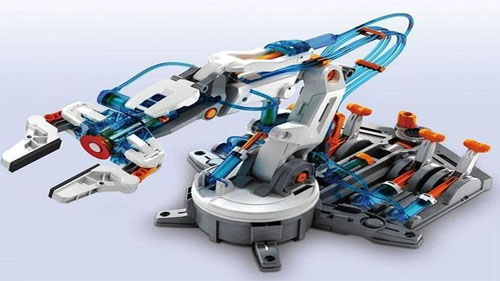
You need only two fingers, as long as they are 1 ton hydraulic clamps.
I can do both of these with regular hands…
I can do both of these with
regularmy amazingly nimble super handsFixed it for you 😛
 Maybe I’m even weirder than I thought but it didn’t seem too difficult to me, but finger grip strength and side of finger skin toughness and grippiness probably make a big difference. Instead of coming from below the pinky is attached normally and wraps around just below the factory seal ring. Instead of on top, index and middle finger both oppose thumb for more torque. Hold with bottle upright on table with slight downward force if the initial turn is too tight.
The other image after closer inspection I don’t even know what its meant to be. At first I thought is was a syringe but the blood donation clinic nurses single hand triple wield that shit easier than I can syringe feed a parrot that could bite my fingers to the bone. It says screwing motion but I have taken apart and assembled so many things without the proper tools or clamps, behind object towards self screw driving without magnetic bits, etc., and I can’t think of a single situation where I would do that even if I had alien mirror hands.
The other image after closer inspection I don’t even know what its meant to be.
Reminds me of a watchmaker’s screwdriver.
Then again, that’s exactly how I am using them. No need for a special hand. They have that nice rotating thing on top so you can hold it in place and turn it either way…
Edit: on second thought, it WOULD be nice to have a thumb or two extra to hold the base while working. However, we already invented the vise…
I think that’s the point of the second image as well - you could hold it in the air. The red tips are the “thumbs”. Not two thumbs opposed to each other, but another thumb to oppose the pinkie when the “primary” thumb opposes the index and middle finger.
hand*
deleted by creator
I can open a bottle with one hand already by gripping it with my pinky and palm? Whats the point
I think it’s that they’re holding the bottle while opening it
If I had neural linked prosthetics I’d be down to try stuff like that
Eh, we don’t have a way to mimic proprioception, so you’d basically have to constantly concentrate on every aspect of what you’re doing and rely on visible ques. You’d basically be giving yourself peripheral neuropathy.
It should be possible in theory, if expensive to do properly. Sensory pathways can be intercepted just like motor pathways can. So long as the damage or atrophy isn’t too extensive, it should be possible to recreate most aspects of a biological limb. In 100 years, it might not be an issue anymore.
Possible can often be pretty far from likely. We already have the capability to reintegrate nerves to different healthy muscle groups with procedures like Targeted Muscle Reinnervation. However it takes a rare type of amputation candidate to be successful and is extremely expensive.
Like a lot of things in healthcare, just because there’s a way to do something doesn’t mean there’s a will to do so.
Sometimes I wonder what would happen if we created a dolphin with a human brain, or an octopus with a human brain, etc. Are brains plastic enough to adapt? What if after learning how to use one body, the brain was somehow transferred to / plugged into a different body? Would it be possible to learn 2 different bodies and even swap between them at will?
I think so, like cars are a fairly simple version of that. And if you’ve ever used a digger which is essentially a giant arm controlled by hydraulics
If you put on glasses that turn your vision upside down you’ll adapt to it within a week, it will literally just start looking normal to you.
I think we can quite literally adapt to fucking anything if we just do it right.
My name is Inigo Montoya…
Might be useful for someone with a disability. My husband has access to like…1.5 hands so this would be cool!
Heretofore unknown ways of dropping in an alka seltzer

Pretty soon they’ll be all thumbs! What could go wrong?
I wonder how good they are for fingering…
I like how you think
I can screw with my hands tied behind my back. The design is superfluous. Do better